
Google
A A A A A
The Man Who Was Hamlet
THEATRE
George Dillon
Dates
Images
Productions
Workshops
VITAL THEATRE
Decadence
Ecce Homo
Graft
Hamlet
Hell & Other Tales
Hell / Dream of a Ridiculous Man
Judgement
Stunning the Punters
The Man Who Was Hamlet
To Break a Man
The Gospel of Matthew
The Remembrance of Edgar Allan Poe
Past Gigs List
Reviews List
Thanks
Workshops
GEORGE DILLON
C.V. (Acting)
Solo
Dillon in Brighton
Dillon in Edinburgh
Dillon & Berkoff
Berkoff on Dillon


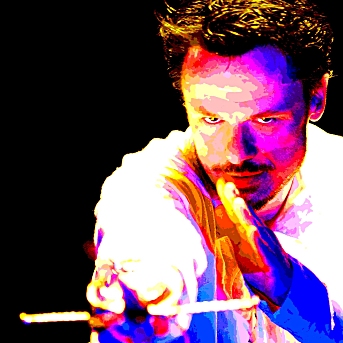
The Man Who Was Hamlet  


Blurb Images Reviews Links Dates Tech Specs

The Tragical Comical Romantic and utterly scandalous History of the man behind Hamlet - no, not the illiterate tax-dodger of Stratford, but the real 'William Shake-speare' - Edward de Vere, 17th Earl of Oxford.


Courtier, swordsman, adventurer, playwright and poet, Edward de Vere killed a servant, made love to Queen Elizabeth, abandoned his wife, got his mistress with child, travelled in Italy, was captured by pirates, fought the Armada, was imprisoned in the Tower of London, maimed in a duel, kept two companies of players and died virtually bankrupt.

He was also hailed as the best of the secret court writers but his work suddenly stopped after the first invention of... 'William Shake-speare'.

So was de Vere the inspiration for Hamlet... or was he really the author?

A monstrous apparition comes with a dramatic story to tell and the name of 'Shakespeare' will never sound the same again, after award-winning performer George Dillon presents his 8th solo show, with original music by Charlotte Glasson, directed by Denise Evans.

“It’s easy to see why Dillon’s performances have made him the toast of the Edinburgh Festival... direct and absorbing... A virtuoso display of dramatic range.”
British Theatre Guide

“An exciting piece of writing, witty and sharp, ironic, comedic and sometimes philosophical and, as usual, a masterclass in delivery and individual performance.”
Fringereview.com

“O God! What a wounded name, Things standing thus unknown, I leave behind me! In this harsh world draw thy breath in pain, To tell my story!”
Hamlet / Edward de Vere)

The Man Who Was Hamlet

The Man Who Was Hamlet

Brighton-based actor George Dillon is known for his close association with Steven Berkoff and for creating a number of compelling one man shows which have toured extensively in the UK and abroad. He won a Herald ‘Angel’ award in Edinburgh for GRAFT - TALES OF AN ACTOR and has twice been nominated for The Stage Best Actor award - for GRAFT and for his own translation and performance of THE GOSPEL OF MATTHEW.


100 word blurb:

The Tragical, Comical, Romantic and utterly scandalous History of the man who was Hamlet... not the illiterate tax-dodger of Stratford, but the real 'William Shakespeare'... Edward de Vere, 17th Earl of Oxford.

Courtier, swordsman, adventurer and poet, his story involves murder, travel, pirates, a love-child, imprisonment in The Tower and fighting the Armada. Hailed as the best of the secret court writers, his work suddenly stopped after the appearance of ‘Shake-speare’. So was de Vere the inspiration for Hamlet... or was he really the author? Award-winning performer George Dillon presents his 8th solo show, with original music by Charlotte Glasson.


IMAGES

The images below links to hi res jpegs, suitable for publication in brochures/newspapers etc.
Permission is hereby granted for the reproduction of these images for the sole purpose of publicising scheduled performances of Vital Theatre's production of The Man Who Was Hamlet. Permission is NOT granted for the use of this image for any purpose unrelated to performances by Vital Theatre. Requests for any such use must be made in advance of publication.

Brochure Image

The Man Who Was Hamlet Brochure Image

PRODUCTION STILLS (18th March 2009)
(Credit: George Dillon in 'The Man Who Was Hamlet', Photo by Charlie Baker)

The Man Who Was Hamlet

The Man Who Was Hamlet

The Man Who Was Hamlet

The Man Who Was Hamlet

The Man Who Was Hamlet

The Man Who Was Hamlet


Tech Specs

the_man_who_was_hamlet_lighting_plan.pdf

the_man_who_was_hamlet_lighting_plan.gif

the_man_who_was_hamlet_cue_list.pdf


Reviews

"A big production in a small theatre and a cut above your average one-man show."
The Argus

"An exciting piece of writing, witty and sharp, ironic, comedic and sometimes philosophical and, as usual, a masterclass in delivery and individual performance."
FringeReview

"Makes a good drama even without the Shakespeare theory."
Dorset Echo

"It’s easy to see why Dillon’s performances have made him the toast of the Edinburgh Festival... direct and absorbing... A virtuoso display of dramatic range."
British Theatre Guide

"A thought-provoking evening to anyone with even a passing interest in Shakespeare and an enquiring mind."
Surrey Mirror

"Very imaginitive... brilliantly scripted, the writing is witty and extremely well researched... Dillon's performance is excellent... keeps the audience engaged throughout even if you have only a passing interest in Shakespeare."
Guide2Bristol.com

"A man. A stage. A time for perfect theatre... An evening of theatrical pleasure that leaves you inspired."
Nerve

"This immaculate play is demanding. You will want to see it again. I entreat you to check when the play will be performed near you."
De Vere Society Newsletter


Download All Reviews as a single .pdf file


The Argus

Review by Joanne Davis, Wednesday 3rd December 2008

A FATHER’S ghost, a mother quick to remarry and a servant slain - Edward de Vere’s story has many parallels with that of Shakespeare’s Hamlet.

Actor George Dillon inhabited the role of the 17th Earl Of Oxford, a courtier, swordsman, adventurer, playwright and poet, whose ghost arose to tell his story.

If we are to believe Shakespeare based Hamlet on de Vere, or even that de Vere was Hamlet’s author, then this was de Vere’s revenge.

Fragments of the play were interspersed seamlessly with original writing - for example, de Vere’s silent grief for his father and the Polonius-like William Cecil’s advice to his ward to "neither a borrower nor a lender be".

Even the young William made an appearance, with de Vere admonishing the boy for not learning to read or write. He later, rather foolishly, offered him one of his sonnets to use to win back his wife.

The play had its lighter moments - not least when de Vere, commencing, "To be or not to be...", was cut off by William exclaiming: "What kind of question is that?"

What kind of question, indeed, for de Vere’s story was not a revenge tragedy but one more familiar to its 21st century audience - one of advancement, and the legacy we leave behind.

With an impressive performance by Dillon, simple but effective lighting, and a score performed by Charlotte Glasson on multiple instruments, including a saw, this was a big production in a small theatre and a cut above your average one-man show.


The original of this review first appeared at:
http://www.theargus.co.uk/


Download this review as a .pdf

FringeReview

Interview/review by Paul Levi, January 2009

FringeReview caught up with George Dillon, creator of "Graft" and "The Gospel of Matthew"; the man about whom Steven Berkoff said: "...The best example of someone to watch how to perform is George Dillon..."

Breakfast in Brighton with George Dillon! And a discussion about "The Man who was Hamlet - this was an opportunity too good to miss. Dillon is back in 2009 with his one-man performance format, something he has done so well over recent years. Dillon presents in "The Man Who Was Hamlet" a combination of many-character performance, with historical exposition exploring the "real" identity of William Shakespeare, proposing Edward de Vere as the real author of Hamlet and much (if not all) of the rest of the Bard's repertoire.

I managed to see an early version of this new production, ably directed by Denise Evans, at probably the best studio theatre space in Brighton, the New Venture Theatre.

Dillon took the square performance space and presented it in a diamond format, with audience fanned out from one corner and Dillon making full and intelligent use of the space provided by the opposite corner. This enabled him to play very effectively with opening out the space as he story-told us through much historical detail via a mix of comedy and highly intense scene-playing as we journeyed through a broad history as well as the biography of de Vere himself. Then Dillon would retreat into the furthest corner from us, the light diminishing, and we shared his prison cell in the Tower.

This is a piece in its early stages of development, an exciting piece of writing, witty and sharp, making delightful use of Shakespeare's own lines in ways ironic, comedic and sometimes philosophical. Dillon has created a dramatic charger he has yet to fully mount but this is a piece in its earliest stages and, as usual, we were treated to a masterclass in delivery and individual performance.

Don't miss this on tour in 2009.

The original of this first appeared at:
http://www.fringereview.co.uk/


Dorset Echo

Review by Marion Cox, January 2009

There is nothing new about conspiracy theories, one of the most famous of which is that the Bard of Stratford upon Avon did not write the plays that bear his name.

The trouble is, nobody has yet come up with a wholly convincing alternative although George Dillon makes a good stab at bringing Edward de Vere, 17th Earl of Oxford into the picture.

This one-man play creates, with much skill, a potted biography of the aristocratic Englishman told with well-chosen snippets from Shakespeare's plays, in particular that of Hamlet, whose story bears some resemblance to that of de Vere.

With dramatic effect, Dillon paints a picture of a cultured though arrogant man whose relationship with Queen Elizabeth led him into turbulent waters including being incarcerated in the Tower.

What becomes clear as the story unfolds is that de Vere's life makes a good drama even without the Shakespeare theory, much of which is debatable anyway except to the most devoted Earl of Oxford fan.

Not mentioned is why such a man as de vere - who was known in contemporary circles as a respected poet - would wish to conceal his authorship of such masterpieces as Shakespeare's plays.

But the play's the thing and Dillon does a neat job of presenting the eventful life of an Elizabethan courtier who was born into privilege and power but who squandered both with a lifestyle that would do credit to any number of today's mega-rich celebs.

With gently atmospheric live music from Charlotte Glasson, the production is an interesting diversion around a debate that will probably continue to rage for generations to come.


British Theatre Guide

Review by Gail-Nina Anderson (2009)

The title of George Dillon’s latest one-man performance sets out its wares but also begs the big question. As any “Oxfordian” will tell you, while the hero of the piece, Edward de Vere 17th Earl of Oxford, may quite feasibly have provided the prototype for some aspects of Hamlet, he is also front-runner to have actually written the plays of Shakespeare (always assuming, that is, that you’re not one of those “Stratfordians” who persist in believing they were penned by the comparatively obscure figure of William Shakespeare. There is also a Baconian party, but the feasibility of their candidate would seem to be on the wane in recent debates.)

Dillon didn’t quite lead us down that path, though it was left seductively open to view. It wasn’t really necessary to engage with such controversial issues when the raw historical material is already so richly-laden with politics, romance, treachery, adventure and the unassailable ego which was obviously the birthright of the aristocratic Elizabethan male. It says a vast amount for Dillon’s performance that it engaged his audience in such a satisfying way with a character who was pretty despicable in modern terms (though the excuse that he couldn’t attend his first wife’s funeral because he was off fighting the Spanish Armada does have the ring of period authenticity to it.)

It’s easy to see why Dillon’s performances have made him the toast of the Edinburgh Festival. This was pared-down, intimate theatre demanding sheer bravery on the part of the actor, who takes the stage armed with nothing more than a skull, a rapier and an elaborate set of lighting cues. A neat beard and a big shirt will do wonders to focus our attention, however, for with such minimal accoutrements he convincingly presented himself as a man whose expectations were as unquestioningly Elizabethan as his manner was direct and absorbing.

The journey through Oxford’s life isn’t an easy one to boil down into a soliloquy, so the evening was a virtuoso display of dramatic range that never risked coming close to over-statement or caricature – unlike his subject, Dillon is a master of subtle, unspoken control. Oxford was twelve when his father died and his mother remarried with unseemly haste, so the story starts with an arrogant, bewildered boy, aware that he is being shunted out of his family, but never relinquishing a jot of his aristocratic status and identity. A royal ward educated in the house of Sir William Cecil (whose daughter he married with less than harmonious results), he became a curious mixture of Renaissance Man and upper-class lout, and it was fascinating to see gradually revealed an individual who could encapsulate all the gentlemanly arts while nonetheless cherishing a concept of honour that sounds dangerously close to piracy.

Later in life (he died at 54), having travelled all the recognised routes to glory and self-fulfilment and found them disappointing, Oxford found solace and involvement (not to mention royal approval) with the acting companies to which he stood patron. But did he also find time to write the plays that survive under Shakespeare’s name? It was cunningly left to the words and circumstances of the piece to suggest this argument without polemic. Cecil’s advice to the aspiring young man was a brilliant example of this technique, with the sentiments of Polonius’ homily to Laertes recast into an entertainingly uncanonical, yet recognisable, variant. One Will Shakespeare is, however, mentioned - as an egg-headed boy of no book-learning who eventually finds his way into Oxford’s household en route from a shrewish wife for whom he cannot write poetry.

The enthusiastic response to this game did defuse the one issue I might have taken with the piece – how well are you expected to know your Shakespeare in order to appreciate it? The audience at South Shields was clearly appreciative, and though many of the textual references were obviously being picked up, I suspect that essentially it was the performance itself which impressed. Afterwards I heard someone describing the courage of Dillon’s acting, and certainly in theatre of this direct and unadorned kind, there isn’t a safety-net. The clarity of delivery, assurance of movement and generosity of spirit which characterised the whole project were so rewarding that I feel like an absolute churl when I say that I’m still rooting for Will from Stratford as the onlie begetter of those everlasting plays.

The original of this review first appeared at:
http://www.britishtheatreguide.info/


Download this review as a .pdf


The Surrey Mirror

Review by Tony Flook (May 2009)

George Dillon is a firm believer that William Shakespeare did not write – indeed could not have written - the plays and poetry attributed to him.

This comes through subtly but unequivocally in his engrossing one man show, The Man Who Was Hamlet.

Speak to him offstage and he will explain in detail his well-researched view that, although there are other contenders, the Bard's works were, in fact penned by Edward de Vere, 17th Earl of Oxford.

Dillon brings his colourful, volatile subject strikingly to life, with no props except, appropriately, a fencing sword and a large book, plus an ever-present skull, to which no direct reference is made.

Born into a noble family with its lineage stretching back 500 years, de Vere was orphaned and took his title at the age of 12.

He became a courtier, entered into an arranged marriage, abandoned his wife (with whom he was later reconciled), travelled abroad, was held by pirates, fathered an illegitimate child, fell out of favour with Queen Elizabeth and was briefly imprisoned in the Tower.

He was later reinstated at Court but dedicated his later years to literature and died, virtually bankrupt, at the age of 54.

The actor not only personifies de Vere from near childhood to his heavily dramatised Hamlet-inspired death speech but also takes on both sides of numerous conversations with the queen and with others who cross his path. His confrontation with Sir Philip Sidney, a rival at Court, shows his flair for mimicry and his tirade against him a master-class in invective.

Solo productions can be static affairs but this play is physical by any standards. Dillon used every inch of the stage at The Hawth – unusually large by studio standards – in his agile sword-play and other activities to depict his subject.

The show, directed by Denise Evans, is enhanced by intelligently focused lighting and by Charlotte Glasson's evocative music.

A thought-provoking evening to anyone with even a passing interest in Shakespeare and an enquiring mind.

The original of this review first appeared at:
http://www.thisissurreytoday.co.uk/


Guide2Bristol.com

Review by Natalie Burns (5 March 2010)

The works and life of William Shakespeare are subject to all manner of literary and historical debate. The subject of who the man really was, his sexual preferences, his background and where he learned his craft, and which, if any, of the works assigned to him really are his still interest us. It is the latter topic that is addressed in the very imaginative ‘The Man who was Hamlet’.

George Dillon performs a one man play that is brilliantly scripted and packed full of historic and literary references to not only Hamlet, but many of Shakespeare’s other works. Dillon plays the part of Edward De Vere, seventeenth Earl of Oxford.

The play explores the possibility that Hamlet may have been based on De Vere’s life, or that De Vere may have actually been Shakespeare himself, and that the writer we think we know may have been the illiterate son of a glove-maker. The illiterate ‘William’ makes a brief and comical appearance in the performance. We see Dillon’s De Vere rise from the grave to tell his story: the story of his life as an adventurer, swordsman, adulterer, and secret playwright to the court of Queen Elizabeth I. The story of his life is the story of Hamlet rearranged, part historical fact, part literary fantasy.

Dillon’s performance is excellent, making use of only three props and the small stage. The writing is witty, and the content extremely well researched, incorporating Shakespearian references, characters taken from Hamlet (Polonius appears as an interfering old man called Cecil, among others) and original Shakespearian lines.

Dillon’s acting range is varied and keeps the audience engaged throughout, and even if you have only a passing interest in Shakespeare, the performance is likely to keep you entertained for the ninety minute duration. However, an in-depth knowledge of Shakespeare and the literary theory surrounding him would have made the play a much more satisfying, amusing and gratifying experience.

Some of the audience I suspect missed many of the subtle references, puns and nods to the literary and historical debate around the story of Shakespeare and De Vere. I know I did! I found myself racking my brains for forgotten facts I learned whilst doing my literature degree, and I studied Shakespeare. I realised much of the audience were in the same boat when a much too loud laugh echoed around the auditorium in response to the really familiar references; ‘To be, or not to be’ was understood by all, and I got the feeling the audience were, in general relieved to identify something recognisable.

Taken simply as entertainment, the performance is interesting, well acted, brilliantly written, and a unique take on something we all have some basic knowledge of. But to do the play and its writing justice, you will definitely need a much more thorough familiarity with the bard who may, or may not have been, William Shakespeare.

The original of this review first appeared at:
http://www.guide2bristol.com/


Nerve

Review by Nadia Baha (February 2010)

A man. A stage. A time for perfect theatre.

George Dillon is an exceptional actor. Not one mistake - he plays all the characters, which means changing pitch and the way of speaking as well as the language within split seconds.

Did Shakespeare ever write? Who was Hamlet? Did they even exist? Who was behind the name Shakespeare? Was it a collective?

Who is really telling the story here? Is it Hamlet or Shakespeare? It is not George Dillon, that’s for sure. He is all the characters he embodies on stage. This play doesn’t need a lot of props. Back to basics is the motto and so it is just the actor and a sword.

The play is especially interesting if you know the plays, as it is full of quotes and hints - funny at times and deadly serious in parts.

The music fits the scenes well and underlines the words. You can feel Dillon's commitment and enthusiasm for acting. An evening of theatrical pleasure that leaves you inspired.

The original of this review first appeared at:
http://www.catalystmedia.org.uk/


The following review was written by a member of the De Vere Society for the society’s newsletter:

The De Vere Society

Review by John Gill , May 2009

My wife Jane, on the distaff side of my de Vere marriage, (the opposite side is known as the “spear-side”) loved and was intrigued and fascinated by George Dillon’s one-man play: This is important.

The menials and cleaners in recording studios were at one time known as the “old greys”. When they were caught whistling any new tunes they had picked up while they passed by with their mops and buckets, this was taken as an omen that the song would be a hit. The song had passed the “old grey whistle test”. This is important, because an unforced and natural opinion is reliable.

As members of the partisan coterie that is our de Vere Society we are often invited to credit a certain amount of dogged lunacy that makes up in effort for what it signally lacks in scholarship; but because we are so few we have to hold our tongues. I say this so that you might not discount my praise when I say of a fellow member that this is a definitive and marvellous work.

George Dillon, on stage as one-man band, impresario, lothario and Horatio has written a remarkable biography of our hero. With little more than Yorick’s skull, a big red book and a beautiful sword, his experience in playing Hamlet on the stage towards the end of the last century informs every crisply penned and spoken line. The understated lighting and the music for the performance were incisive. The whole performance in every single detail is the journeywork of one with a lifetime devoted to the stage, and one with a determination to give Lord Oxford his just dues.

Silent and riveting, the opening swordplay is the work of a master hypnotist. Before long you are taken upon the edge of his rapier into a new and an enlightening world. Any person who, bit by bit, becomes convinced that the husband of Ann Hathaway could do little more with words than sign his name in order to deprive her of a decent bed, knows that it is hard work and a long journey to become steeped in the Elizabethan world enough to divine that another was behind the works of Shake-speare. So this immaculate play is demanding. You will want to see it again. It will serve as an introduction to the heartbreak that informs the life and work of Edward de Vere, even if you think you know all about it; and because it is such a piece of work I entreat you to check when the play will be performed near you.

George told me that he had written the play in blank verse. This is clear if you have a sight of the text, and it explains how it is that the words on the stage can be delivered with such power. The language is taut; a simplified and succinct “Shakespeherian rag” that mixes the text of Hamlet in with the life of Edward de Vere so that it convinces; and in an entertaining and very creative way juggles with the known history of our nobleman.

Mr Dillon wrote the play, designed the adverts, printed the flyers paid for the set. Most of all George acted all the myriad parts, Elizabeth, DV, Ghost, Hamlet etc. He has a beautiful voice, a commanding presence and is a practised and wonderful swordsman.

George Dillon. After George Clooney and Bob Looney, what a marvellous name for a playwright and actor! I first spied him in the midst of the throng all beset with cramp trying to get warm after sitting through the AGM draughts of Castle Hedingham. At the time, he being pierced and penniless, we were pressed into giving him a lift back to the south. He turned out to be a rather earnest companion, theatrically depressed at this time at the course of his life. A year later, I reminded him of this, at The Surrey History Centre, the day after we saw his matchless play, but he had forgotten it all.

So to see this play in its finished form defied my expectations. In the context of what passes for drama in the modern theatre it was so startlingly well-crafted that it was a revelation. I now know more of the man and the jumbled wings that we carried south in our car. He had been at work on this play. It was an Icarus that we carried to sanctuary after he had fallen from the skies of inspiration. The Man Who Was Hamlet will, I hope be the work that will allow his reputation to soar; a trajectory the more transcendent because it started so low may be seen one day for what it is, a comet we return to, up there with the journeywork of the stars.


Download this review as .pdf


Some Links

A Short Life of Edward de Vere

10 Reasons for doubting the Stratford theory

The De Vere Society

www.doubtaboutwill.org

www.shakespeare-oxford.com

The Sussex Rapier School


Forthcoming Vital Theatre Dates:

2010
Man Who Was Hamlet 3rd-7th, 10th-14th March 2010 Bristol
Workshop 15th March 2010 Bedford
Graft 18th March 2010 Canterbury
Workshop 20th March 2010 Sevenoaks
Workshop 22nd March 2010 Northampton
Workshop 23rd March 2010 Canterbury
Workshop 24th March 2010 Billingshurst
Man Who Was Hamlet 25th & 26th March 2010 Salford
Gospel of Matthew 18th May 2010 LONDON, Bloomsbury Central Baptist Church
Gospel of Matthew 19th May 2010 LONDON, St James's Church, Piccadilly
Gospel of Matthew 20th May 2010 LONDON, St Paul's Covent Garden (The Actors' Church)
 
[ Pop-up a printable version of this page ]
The Man Who Was Hamlet
http://www.georgedillon.com/theatre/the_man_who_was_hamlet.shtml
[Updated - 09 March 2010]
Contact | Home | Kendo | Theatre | Web | Search

  Back to top    Back to top
Make payments with PayPal - it's fast, free and secure!
PageRank Checking Icon